
📞 Tel:+86-750-3857665
Email:sales@enpowertec.com
Email:sales@enpowertec.com
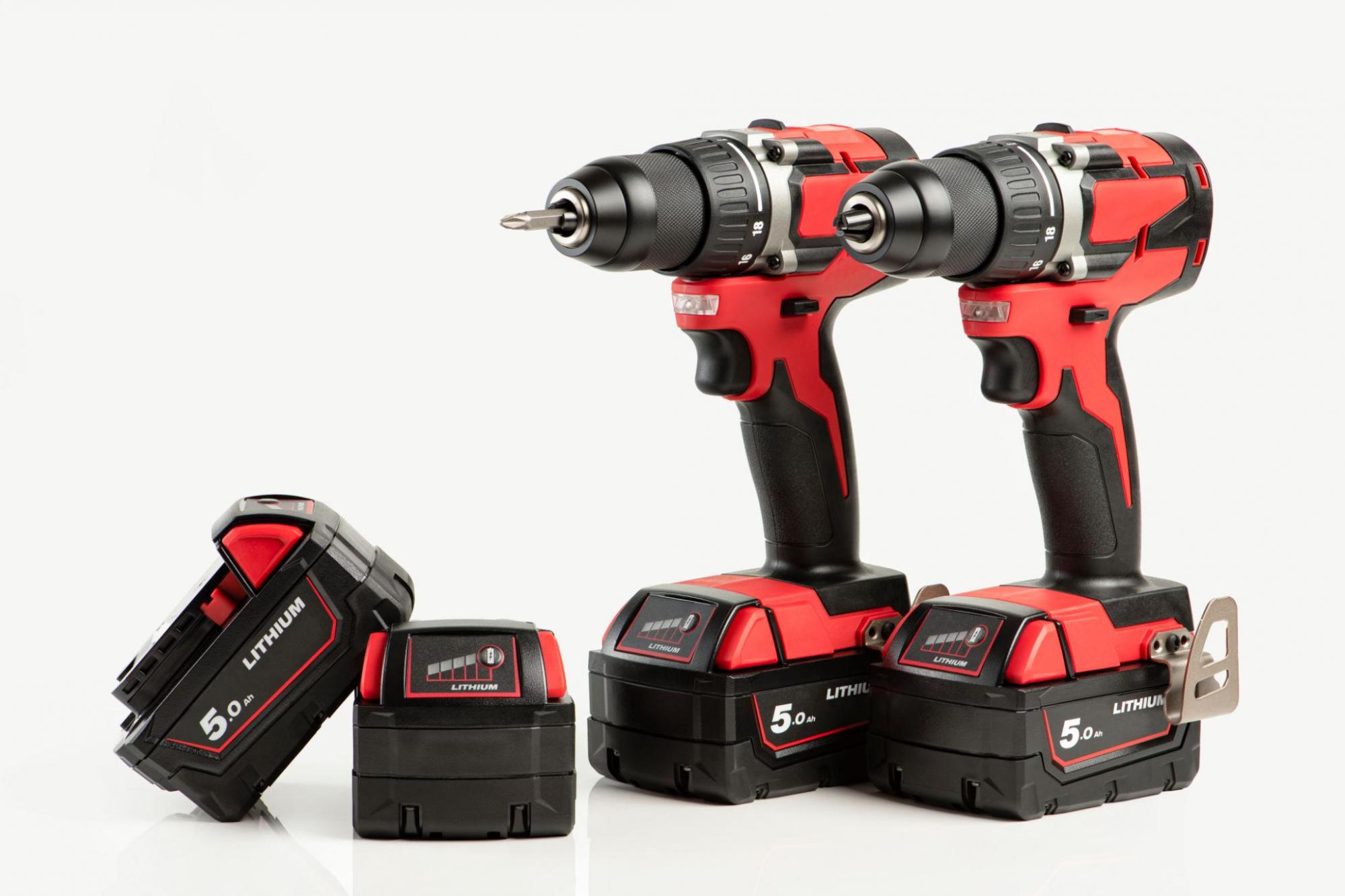
Power tools are widely used in construction, manufacturing, woodworking, automotive repair, and home improvement. From cordless drills and impact drivers to angle grinders and circular saws, reliable battery power is essential for keeping tools productive and ready for work.
However, choosing the right power tool battery can be confusing. Batteries may have different voltage ratings, capacities, connector designs, and charging requirements. Even batteries from the same brand may not be interchangeable across every tool model.
Whether you are a professional contractor, tool repair specialist, battery distributor, or purchasing manager, understanding power tool battery specifications can help you choose a suitable replacement and avoid unnecessary costs.
In this guide, we explain power tool battery voltage, capacity, compatibility, battery chemistry, and charging requirements to help you make an informed purchasing decision.
A power tool battery is a rechargeable battery pack that supplies electrical energy to cordless tools. It allows users to operate equipment without connecting directly to a power outlet.
Modern cordless power tools commonly use lithium-ion (Li-ion) battery packs because of their high energy density and relatively low self-discharge. Some older tools may use nickel-metal hydride (Ni-MH) or nickel-cadmium (Ni-Cd) batteries.
A power tool battery pack typically consists of rechargeable cells, electrical connections, a protective housing, and, depending on the design, electronic monitoring or protection components.
The battery must be compatible with the tool's electrical requirements and charging system to provide reliable operation.
Common applications include:
Cordless drills and impact drivers.
Angle grinders and circular saws.
Cordless screwdrivers and wrenches.
Sanders and other woodworking tools.
Portable cutting and grinding equipment.
Professional construction and maintenance tools.
For industrial users and battery distributors, understanding these applications is important when selecting replacement batteries or evaluating customized battery pack solutions.
Voltage is one of the most important specifications when selecting a power tool battery.
In general, voltage describes the electrical potential supplied by the battery. The tool is designed to operate within a particular voltage range, so the replacement battery must meet the manufacturer's requirements.
Common power tool battery voltage ratings include:
These ratings are examples rather than a universal compatibility standard, and they depend on the manufacturer and product platform.
A higher nominal voltage can support different power requirements, but voltage alone does not determine the performance of a power tool.
Actual performance also depends on the tool's motor, electronics, battery current capability, cell configuration, and operating conditions.
Battery labels sometimes display nominal voltage, while product marketing may use a maximum or fully charged voltage.
For example, certain lithium-ion battery platforms are marketed as 20V Max while being described as 18V nominal systems. This naming convention depends on the manufacturer's rating method.
When replacing a battery, compare the original battery specifications and the tool manufacturer's compatibility information rather than relying on the number printed in the product name alone.
Battery capacity indicates how much charge a battery can store and is commonly expressed in amp-hours (Ah) or milliamp-hours (mAh).
For example, a 2.0Ah battery has a rated capacity of 2 amp-hours under specified test conditions. A 5.0Ah battery has a higher rated charge capacity, although actual performance depends on the discharge conditions and battery design.
For compatible batteries operating under comparable conditions, a higher-capacity battery will generally provide longer runtime.
The actual operating time depends on several factors:
Tool power consumption.
Workload and material resistance.
Motor efficiency.
Battery temperature.
Battery age and condition.
Continuous versus intermittent operation.
A cordless drill used for light fastening may run much longer on the same battery than an angle grinder performing demanding cutting work.
Potentially, yes. If the battery is approved for the tool platform and meets the required electrical and mechanical specifications, a higher-capacity battery may extend operating time.
Before choosing a higher-capacity battery, verify compatibility and consider the balance between runtime, weight, and practical working requirements.
The following table illustrates common power tool battery configurations and their typical purchasing considerations.
| Battery rating | Typical application considerations | What to verify |
|---|---|---|
| 12V | Compact tools and lighter-duty applications | Platform compatibility, capacity, and connector |
| 14.4V | Certain legacy and specialized cordless tools | Original battery model and charger |
| 18V | Widely used cordless tool platforms | Exact tool platform and compatible battery series |
| 20V Max | Marketing designation used by certain manufacturers | Nominal voltage and manufacturer's compatibility information |
| 36V / 40V Max | Certain higher-power cordless equipment | Tool platform, current requirements, and battery configuration |
Battery compatibility is one of the most important considerations when purchasing a replacement power tool battery.
A battery may have the correct voltage and capacity but still be unsuitable for the tool.
Start by identifying the manufacturer and exact model of the power tool.
Some manufacturers use different battery platforms across product generations, even when the batteries appear similar.
Many manufacturers develop battery platforms that support multiple tools within a compatible product family.
However, compatibility should never be assumed across every product from the same brand.
Check the manufacturer's documentation to confirm whether the replacement battery is approved for your specific tool.
The connector design determines how the battery connects to the tool. Check the following points:
Confirm the battery terminal layout matches the tool and the original battery pack.
Compare the connector shape and dimensions, including any recess or keying features.
Check the positive and negative terminal positions before connection.
Identify any additional temperature-sensing or communication contacts.
Verify the mechanical locking and release mechanisms engage correctly.
Some modern battery platforms use electronic communication between the battery, tool, and charger.
Depending on the design, the system may monitor temperature, current, battery condition, or other operating parameters.
A replacement battery must provide the functionality required by the tool platform. Matching the external connector does not necessarily guarantee electronic compatibility.
A replacement battery must also be compatible with the charger.
Verify the approved battery series, charging voltage, charging current, and any relevant electronic requirements.
Battery chemistry affects energy density, weight, charging requirements, and maintenance.
Li-ion batteries are widely used in modern cordless power tools. Their general characteristics include:
High energy density.
Relatively low self-discharge.
A wide range of pack configurations.
Specific charging and protection requirements.
Ni-MH batteries are rechargeable and may be found in older or specialized cordless tools.
They generally have lower energy density than modern Li-ion alternatives and require charging procedures appropriate to Ni-MH chemistry.
When replacing a Ni-MH battery, verify whether the original equipment supports any alternative chemistry before making a change.
Ni-Cd batteries are used in some older power tools.
Although they have historically been valued for certain demanding applications, cadmium presents environmental hazards, and its use and disposal are restricted in many markets.
If a tool still uses a Ni-Cd battery, check whether a compatible replacement or an approved alternative is available.
| Feature | Li-ion | Ni-MH | Ni-Cd |
|---|---|---|---|
| Energy density | Generally high | Generally moderate | Generally lower |
| Weight for comparable stored energy | Often lower | Often higher | Often higher |
| Self-discharge | Generally low | Can be relatively high | Chemistry-dependent |
| Charging requirements | Li-ion-compatible charger | Ni-MH-compatible charger | Ni-Cd-compatible charger |
| Typical consideration | Protection and temperature management | Charging and storage | Environmental restrictions and legacy compatibility |
Follow these steps when purchasing a replacement battery for a cordless tool.
Proper use and maintenance can help preserve battery performance and reduce premature replacement.
Always use a charger approved for the battery model and chemistry. Incompatible charging equipment may damage the battery or create safety risks.
For Li-ion batteries, avoid repeatedly draining the pack completely or leaving it fully discharged for extended periods. Follow the manufacturer's recommended charging procedures.
High temperatures can accelerate battery aging, while low temperatures can reduce available power and runtime. Do not charge or operate batteries outside their specified temperature range.
Store batteries in a dry, suitable environment and follow the manufacturer's recommendations for storage charge and inspection. Avoid prolonged exposure to direct sunlight, excessive heat, or moisture.
Inspect battery terminals for dirt, corrosion, and damage. Clean them using an approved method and ensure the battery is dry before reconnecting it.
For professional users who rely on cordless tools throughout the working day, regular inspection and sensible charging habits can help reduce unexpected interruptions.
For distributors, repair companies, and equipment manufacturers, purchasing power tool batteries involves more than comparing unit prices.
A reliable supplier should be able to provide clear product specifications and help assess compatibility. Consider the following factors when evaluating a battery supplier.
The supplier should be able to identify the intended battery platform and explain which tool models the battery is designed to support.
Ask about battery pack assembly, electrical inspection, protection features, and final product testing.
For repeat orders, consistent specifications and manufacturing quality are important for maintaining customer satisfaction.
Some projects require specific voltage, capacity, dimensions, connectors, or protection functions. A specialist battery manufacturer may be able to evaluate these requirements.
Confirm the warranty terms, product traceability, technical support, and procedures for handling product issues.
For distributors and maintenance companies, stable supply and predictable lead times can help manage inventory and reduce delays.
Standard replacement batteries may not meet every industrial or OEM requirement.
For equipment manufacturers, specialist tool brands, and industrial buyers, customized battery packs may be considered when the application requires specific electrical or mechanical characteristics.
Depending on the project, customization may involve:
A custom power tool battery project should begin with a detailed specification review. The manufacturer can then evaluate feasibility, propose a design, and conduct appropriate sample testing.
Enpower Technology specializes in industrial battery solutions and supports customers seeking replacement and customized battery packs for different equipment applications.
For battery distributors, repair companies, and OEM customers, selecting a suitable battery requires careful attention to voltage, capacity, connector design, charging requirements, and product quality.
Enpower can review battery requirements and evaluate potential solutions according to the intended application and technical specifications.
When contacting our team, provide the following information whenever possible:
Providing complete technical information helps identify the specifications that need to be confirmed before purchasing or developing a replacement battery.
For compatibility review, the following product pages can be used as starting points:

Ni-MH Power Tool Replacement Battery for Makita.
View Ni-MH Power Tool Replacement Battery for Makita
High capacity power tool battery pack.
View High Capacity Power Tool Battery Pack
Dyson vacuum battery replacement.
View Dyson Vacuum Battery ReplacementA higher voltage can support different power requirements, but actual tool performance also depends on the motor, electronics, current capability, and battery design. Always use a battery approved for the tool's voltage platform.
Generally, a compatible battery with a higher rated capacity can provide longer runtime under comparable conditions. Actual runtime depends on the workload, tool efficiency, temperature, and battery condition.
No. Batteries with the same voltage may have different connectors, dimensions, electronic communication systems, or charging requirements. Confirm compatibility with the exact tool model.
Only if the battery is specifically designed and verified for the tool platform. Similar voltage and physical appearance do not guarantee compatibility.
Common signs include reduced runtime, charging problems, unexpected shutdowns, physical damage, and unusual heating. Check the charger and tool as well, since these can also cause performance problems.
Some manufacturers can evaluate custom voltage, capacity, dimensions, connectors, and protection requirements. Feasibility depends on the tool's electrical design, charging system, safety requirements, and project specifications.
Choosing the right power tool battery requires a clear understanding of voltage, capacity, battery chemistry, connector design, and compatibility with the tool and charger.
By checking these specifications before purchasing, users can reduce compatibility problems, improve runtime planning, and make more informed replacement decisions.
For distributors, repair companies, and OEM buyers, working with a qualified battery supplier can also support consistent product quality and more efficient procurement.

Enpower integrates R&D, production and quality testing in-house, supporting custom battery solutions for worldwide buyers.