
📞 Tel:+86-750-3857665
Email:sales@enpowertec.com
Email:sales@enpowertec.com
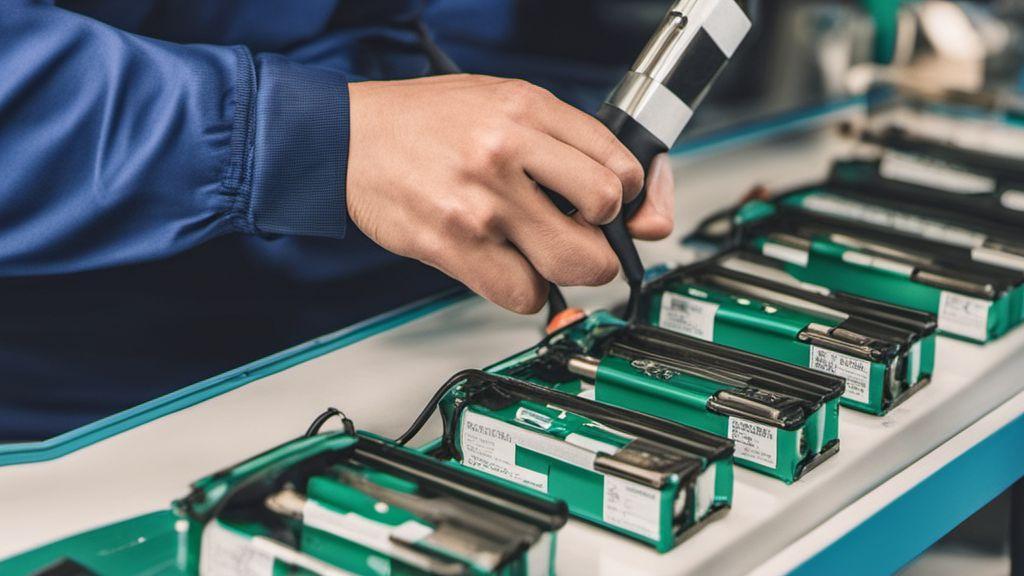
When purchasing batteries for two-way radios, businesses often face an important decision: should they choose OEM batteries or replacement batteries?
Both options can power professional communication equipment, but they differ in branding, sourcing, customization, pricing, and purchasing considerations. For distributors, equipment repair companies, radio dealers, and industrial users, understanding these differences can help reduce operating costs while maintaining reliable communication.
In this guide, we explain the differences between OEM and replacement two-way radio batteries, compare their advantages, and share practical tips to help businesses choose the right battery solution.
OEM stands for Original Equipment Manufacturer. In the radio battery market, the term can refer to batteries supplied for an original equipment brand or batteries manufactured by a supplier for another company's brand, depending on the commercial arrangement.
OEM batteries associated with an original radio manufacturer are generally designed for specified radio models and charging systems.
In a manufacturing context, an OEM battery supplier may also produce battery packs according to a customer's specifications, including dimensions, electrical parameters, connectors, labels, and packaging.
Designed for specified equipment requirements
May be sold under the original equipment brand
Typically have defined product specifications
May be supported by the original equipment manufacturer's warranty and service arrangements
Can offer established compatibility with designated radio models
For businesses purchasing batteries for an existing radio fleet, OEM products can be a suitable choice when original-brand sourcing, documentation, or service arrangements are priorities.
However, OEM does not automatically mean that every battery is manufactured by the radio brand itself. Buyers should confirm the actual manufacturer and supply arrangement.
Replacement two-way radio batteries are designed to replace original batteries in compatible radio equipment.
They may be manufactured by independent battery suppliers and sold under the supplier's brand, a distributor's brand, or a private label.
A replacement battery may offer similar electrical specifications and functionality to the original battery, but compatibility must be confirmed for the specific radio model.
Designed for compatible radio models
Available from independent battery manufacturers
May offer competitive purchasing costs
Can be available in different capacity options, where technically compatible
May support OEM branding and customized packaging
Can provide additional sourcing options for older or discontinued equipment
For radio dealers, repair companies, and distributors, replacement batteries can be an effective way to maintain equipment fleets and expand product offerings.
Important: a replacement battery should not be assumed to be identical to an original battery. Buyers should evaluate compatibility, quality, safety, and performance before making a purchasing decision.
The following table summarizes the main differences buyers should consider.
| Comparison Factor | OEM Battery | Replacement Battery |
|---|---|---|
| Brand | Usually associated with the original equipment brand | Independent brand, distributor brand, or private label |
| Compatibility | Specified for designated equipment | Must be verified for the target radio model |
| Purchase price | May be higher, depending on the product and sales channel | May offer more competitive pricing |
| Product selection | Depends on the original manufacturer's range | May offer broader sourcing and customization options |
| Branding options | Governed by the brand owner's arrangements | Private-label options may be available |
| Customization | Depends on the original manufacturer's offering | May support custom specifications for suitable projects |
| Warranty | Determined by the original supplier's terms | Determined by the replacement battery supplier |
| Best suited for | Buyers prioritizing original-brand sourcing | Buyers seeking alternative sourcing, private label, or customization |
Actual pricing, quality, and service vary by supplier. Neither category is automatically better in every situation.
Price is an important consideration for B2B battery purchasing, especially when ordering hundreds or thousands of units.
OEM batteries may carry a higher purchase price because of brand positioning, distribution arrangements, or service provisions. Replacement batteries may provide additional cost options through direct sourcing from battery manufacturers.
However, the lowest unit price does not always produce the lowest total cost.
When comparing suppliers, consider:
For example, a distributor purchasing replacement batteries for several radio models should evaluate not only the initial quotation but also the supplier's ability to maintain consistent specifications across repeat orders.
A reliable battery with appropriate capacity and verified compatibility may help reduce customer complaints, returns, and equipment downtime.
Whether you choose an OEM battery or a replacement battery, compatibility should be a primary purchasing requirement. Before placing an order, verify the following specifications.
Identify the exact manufacturer and model number of the radio. Similar-looking radios may use different battery packs.
The original battery model number can help the supplier identify a compatible replacement.
The replacement must meet the radio's electrical requirements. A higher capacity may provide longer runtime, but only if the battery design and physical dimensions remain suitable.
Common radio battery chemistries include Lithium-ion (Li-ion) and Nickel-Metal Hydride (Ni-MH). The battery chemistry must be compatible with the radio and its charging system. A similar voltage rating alone does not establish compatibility.
Check the battery's physical dimensions, terminal arrangement, contact design, and installation method.
Confirm that the existing charger is designed for the replacement battery's chemistry and charging requirements.
For B2B buyers, providing the radio model, original battery part number, photographs, and technical specifications can help suppliers evaluate compatibility more accurately.
The appropriate chemistry depends on the radio design and operating requirements, not simply whether the battery is OEM or a replacement.
Li-ion batteries offer high energy density and are generally lightweight for the amount of energy they store.
They are commonly used in modern professional communication equipment where compact size and operating time are important. Potential advantages include:
High energy density
Lightweight construction
Low self-discharge compared with many conventional Ni-MH designs
No memory effect
Li-ion batteries require suitable charging systems and appropriate protection features.
Ni-MH batteries remain useful for compatible legacy radios and industrial communication equipment. Potential advantages include:
Availability for certain older radio models
Established use in industrial and commercial applications
Suitable performance when paired with the correct charger and equipment
Ni-MH batteries generally have lower energy density than Li-ion batteries, although actual performance depends on the specific pack design.
For businesses maintaining older radio fleets, a compatible Ni-MH replacement may be more practical than changing the battery chemistry.
OEM batteries may be the preferred option when:
Original-brand sourcing is required by company policy
The equipment warranty or service agreement specifies approved batteries
Buyers need products supplied through an established original-brand channel
Original documentation and traceability are important purchasing requirements
The original manufacturer provides a suitable product and acceptable commercial terms
OEM sourcing can be particularly appropriate for organizations with strict procurement policies or formal equipment maintenance procedures.
Buyers should still verify the product's origin, warranty terms, and applicable documentation.
Replacement batteries may be a suitable option when:
The business needs a more flexible sourcing strategy
Original batteries are expensive or difficult to obtain
The radio model is older or no longer actively supported
A distributor wants to develop a private-label product range
A repair company needs a dependable source for recurring battery replacements
The buyer wants to explore technically feasible capacity, packaging, or design options
For distributors and equipment service providers, working directly with a battery manufacturer can create opportunities for more flexible purchasing and product development.
The key is to select a supplier that can demonstrate suitable quality control, compatibility, and consistent production.
Before choosing an OEM or replacement battery supplier, use the following checklist.
Confirm the radio model and original battery part number.
Verify voltage, capacity, and battery chemistry.
Check dimensions, terminals, and charger compatibility.
Identify any required protection or temperature-monitoring features.
Request a detailed product specification sheet.
Ask about sample availability and evaluation procedures.
Confirm quality-control and batch-inspection processes.
Review warranty terms and after-sales support.
Confirm minimum order quantity and lead time.
Request applicable test reports and compliance documentation.
Check private-label and packaging options if required.
For larger orders, sample evaluation and written approval of the final specifications can help reduce purchasing risks before mass production.
Enpower Technology Co., Ltd. specializes in battery pack manufacturing for professional communication equipment and industrial applications.
Our product range includes two-way radio batteries, tactical radio batteries, and customized battery packs for customers with specific equipment requirements.
We support B2B customers such as distributors, repair companies, equipment suppliers, and businesses seeking OEM or private-label battery solutions. Depending on the project, customization may include:
Battery chemistry, including Li-ion and Ni-MH
Rated voltage and nominal capacity
Battery dimensions and enclosure design
Connector and terminal configuration
Continuous and peak discharge current
Protection circuit and temperature-monitoring requirements
Product labels and packaging
Our manufacturing process can include:
For replacement battery projects, buyers can provide:
These details help us evaluate the requirements and determine an appropriate battery solution.
If you are looking for a battery manufacturing partner for your radio battery product line, contact Enpower Technology to discuss your project.
OEM and replacement two-way radio batteries can both serve important business needs. The right option depends on compatibility, purchasing priorities, budget, supply availability, and quality requirements.
OEM batteries may suit buyers who prioritize original-brand sourcing and established service arrangements. Replacement batteries may offer greater sourcing flexibility, competitive purchasing options, and opportunities for private-label or customized products.
For B2B buyers, the most effective decision is based on verified specifications, supplier reliability, quality consistency, and total ownership cost, not price alone.
Looking for a reliable two-way radio battery supplier?
Contact Enpower Technology to discuss compatible replacement batteries, OEM manufacturing, and customized battery pack solutions for your business.

Enpower integrates R&D, production and quality testing in-house, supporting custom battery solutions for worldwide buyers.